Politics latest: ‘Unthinkable’ UK could re-enter EU without vote, says Burnham – as he calls new deal ‘landmark moment’
-
by
Raphael Afesomu
- No Comments on Politics latest: ‘Unthinkable’ UK could re-enter EU without vote, says Burnham – as he calls new deal ‘landmark moment’
23rd November, 2026 | News
Burnham Unveils New UK-EU Deal as Brexit Debate Intensifies, Rules Out Rejoining Without Referendum
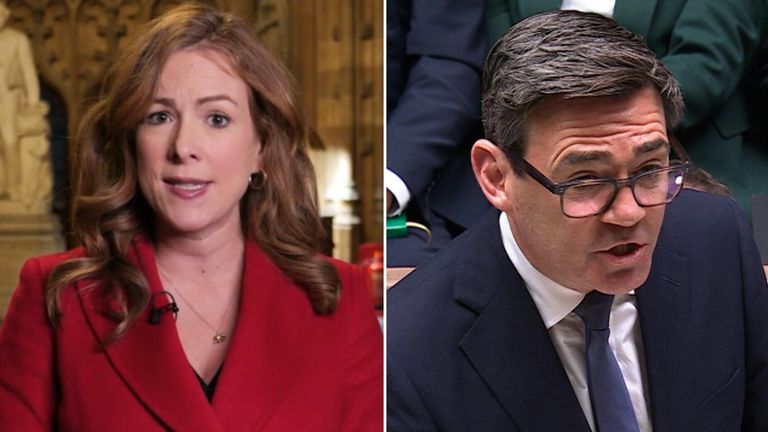
British Prime Minister Andy Burnham has defended his government’s new agreement with the European Union, describing it as a landmark deal that will boost economic growth, reduce food trading costs and strengthen Britain’s relationship with its largest trading partner.
Burnham made the remarks while addressing lawmakers in the House of Commons on Monday, November 23, 2026, following a series of agreements reached between the UK and EU at a summit in Brussels last Friday.
The agreements cover food and agricultural trade, carbon emissions trading and a new youth experience scheme, with the government projecting that the package could increase Britain’s Gross Domestic Product (GDP) by 0.4 per cent by 2040.
The Prime Minister said the agreements would deliver tangible benefits to the country, particularly by reducing trade barriers and helping to lower the cost of food.
However, the deal has triggered fresh political disagreements, with opposition parties questioning the government’s mandate and accusing Burnham of moving Britain closer to the European Union without sufficient public consultation.
Burnham Rules Out EU Rejoining Without Referendum
During his appearance in Parliament, Burnham insisted that Britain would not rejoin the European Union without a public referendum.
Responding to Conservative MP Sir Bernard Jenkin, who asked whether it would be unthinkable for a prime minister to take Britain back into the EU without a referendum, Burnham replied: “Yes, it would be unthinkable.”
He later clarified that he was not proposing another referendum at this stage, stressing that his current agreement was consistent with the commitments contained in his party’s election manifesto.
Burnham said he had promised voters closer ties with Europe and that the new agreement represented the fulfilment of that commitment.
He also disclosed plans to present a broader assessment of Britain’s future relationship with the EU over the coming year.
The options could include a closer trading relationship or other arrangements, depending on what would deliver the greatest economic benefits for the country.
Kemi Badenoch Attacks Government’s EU Agreement
Conservative Party leader Kemi Badenoch strongly criticised the agreement, accusing Burnham of taking Britain backwards and negotiating a deal without a clear public mandate.
She argued that the Prime Minister was attempting to take the country back to 2015 and questioned whether the agreements would deliver the promised economic benefits.
Badenoch also cited concerns from trade groups that the agreement was unlikely to have a significant impact on consumer prices.
She further questioned why the full text of the agreement had not been published following Friday’s summit.
Describing the agreement as a bad deal, the Conservative leader argued that the government was celebrating its potential benefits while leaving important costs and obligations unclear.
Burnham rejected the criticism, insisting that the agreement would protect British industries and improve economic opportunities.
UK-EU Deal Expected to Boost Food and Agricultural Trade
One of the major components of the agreement concerns food and agricultural trade.
The government believes the arrangement will reduce the cost of trading between Britain and the European Union, potentially creating savings for businesses and consumers.
However, the government has acknowledged that it cannot guarantee that lower trading costs will automatically translate into cheaper supermarket prices.
First Secretary of State Louise Haigh told Sky News that retailers would be expected to pass on savings to consumers.
She cited Lidl, Morrisons, Aldi and Marks & Spencer as retailers that had indicated they would reduce costs.
Haigh, however, admitted that the government could not guarantee lower prices for specific products because supermarket prices are influenced by several external factors.
Former government EU negotiator Nick Thomas-Symonds also welcomed the agreement, describing it as a development that would deliver tangible benefits across the country.
He said the agreement could remove hundreds of millions of pounds in trading costs from the agri-food sector, although he acknowledged that other factors, including the war in Iran, could continue to affect food prices.
Government Considers Future UK-EU Relationship
The government has indicated that discussions with European leaders will continue over the next year to examine possible arrangements for Britain’s long-term relationship with the bloc.
According to the report, four broad options are under consideration: rejoining the EU customs union, rejoining the single market, negotiating a Swiss-style arrangement or seeking full EU membership.
However, each option carries different economic and political implications.
Rejoining the single market, for example, would require accepting freedom of movement, while full EU membership would involve a formal accession process.
Sky News reported that Britain would not receive special treatment if it applied to rejoin the European Union.
The country would have to submit an application like any other candidate state, with questions surrounding arrangements such as the Schengen Area and adoption of the euro potentially forming part of negotiations.
Burnham said the government would take a pragmatic approach and assess whichever arrangement offered the best outcome for Britain.
Reform UK and Liberal Democrats React to Brexit Reset
The agreement has also attracted criticism from Reform UK, whose deputy leader Richard Tice described it as a terrible deal.
Tice claimed the youth mobility arrangement could increase immigration by 300,000 people under the age of 31 and argued that it could make it more difficult for young unemployed Britons to find work.
Burnham rejected Reform’s position, questioning why the party continued to criticise closer European ties despite Nigel Farage previously describing Brexit as a failure.
Meanwhile, Liberal Democrat leader Sir Ed Davey welcomed the agreements but argued that many of the arrangements should have been included in the original Brexit deal negotiated by the previous Conservative government.
Davey criticised the existing trading arrangements, saying they had created barriers for British businesses and increased bureaucracy.
He urged Burnham to pursue a more comprehensive agreement with the European Union.
Tuition Fees Remain a Point of Disagreement
Questions have also emerged over whether the new UK-EU agreements are connected to ongoing negotiations about university tuition fees for European students studying in Britain.
The European Union wants its students to pay the same tuition fees as domestic students, currently £9,790 annually, while negotiations are expected to continue over the next six months.
Downing Street has maintained that the agreements on youth mobility, food trade and carbon emissions stand independently of the tuition fee negotiations.
However, Sky News reported that the European Union’s position on whether the arrangements are entirely separate remains less clear.
The agreements are not expected to be implemented before 2028, leaving additional time for both sides to reach an understanding on tuition fees.
Burnham Promises Further Plans for Britain’s European Future
Despite the political disagreements, Burnham has maintained that strengthening relations with the European Union is important for Britain’s economic future.
He said the government would continue examining opportunities to improve trade, increase exports, support young people and reduce the cost of living.
The Prime Minister is expected to present a broader plan for Britain’s future relationship with Europe in December.
For now, the government insists that its latest agreement represents a significant step towards improving relations with the bloc without reversing the decision to leave the European Union.
However, the renewed debate over Brexit suggests that Britain’s relationship with Europe will remain a major political issue in the months ahead.