
EU needs real ‘democracy shield’, not another buzzword
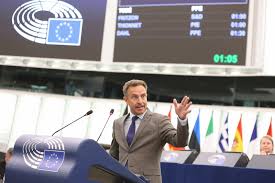
 Raphael Afesomu
The EU Must Act Boldly to Defend Democracy
The European Parliament expects the European Commission to take an ambitious, bold, and forward-looking stance when it unveils the European Democracy Shield this Wednesday, 12 November.
As Russia and other hostile actors intensify their attempts to illegitimately influence democratic processes across Europe, both the EU and its member states must adopt stronger, more coordinated strategies to counter these threats.
In recent years, Russia has made repeated efforts to interfere in European elections — from spreading systematic disinformation to actions aimed at eroding public trust in democratic institutions.
Most recently, intelligence reports documented Russian operations to influence the Czech parliamentary elections through troll farms and foreign campaigns. Earlier this year, during the German elections, the so-called “doppelgänger” phenomenon emerged — where Russian-linked groups created fake replicas of trusted news websites to distribute pro-Russian propaganda.
Another notable case occurred during Romania’s presidential election, which had to be reorganised after widespread reports of Russian interference. Investigations revealed the use of fake social media accounts to manipulate debate, alongside large-scale cyberattacks targeting the national election authority. In the aftermath, TikTok removed more than 175,000 fake or spam accounts linked to the campaign.
These incidents underscore an urgent reality: the EU must adopt a comprehensive and coordinated approach to shield its democratic systems from foreign manipulation.
Although delayed, the European Commission is finally set to present its communication on the European Democracy Shield this week, outlining concrete measures to strengthen Europe’s defences against external threats.
As the European Parliament’s rapporteur for this initiative, my message to the Commission is clear: piecemeal solutions are no longer enough. Europe needs a bold, courageous, and forward-looking agenda to defend democracy.
To build true democratic resilience, the EU should focus on the following key areas:
1. Strengthen the EU’s Capacity to Act
Efforts to detect and counter foreign interference and disinformation must be significantly enhanced. The goal should be real-time detection and response, not merely post-event analysis. EU sanctions and countermeasures must be fully integrated into these efforts.
The proposed European Centre for Democratic Resilience should not be a symbolic office in Brussels. It must become a fully independent, well-funded centre of excellence, coordinating expertise and rapid responses across the Union.
2. Treat Elections as Critical Infrastructure
While election systems vary across member states, there are shared democratic principles and standards. Electoral systems should be formally classified as part of the EU’s critical infrastructure, ensuring stronger protection and closer cooperation through the European Cooperation Network on Elections (ECNE).
3. Establish Clear Digital Rules of Engagement
Freedom of expression — including online — is fundamental. Yet the digital space also requires transparent, enforceable rules. The Digital Services Act (DSA) provides a strong foundation, obliging major platforms to protect users’ rights while combating systemic disinformation.
Platforms must become proactive partners in prevention, not just passive moderators. The EU must also address the growing problem of covertly paid political endorsements by influencers, ensuring transparency and accountability.
4. Support Independent Media and Civil Society
A society resilient to disinformation depends on free media, active civil organisations, and an informed public. In countries where media freedom is under threat — such as Hungary — the EU must step up efforts to protect journalists, empower NGOs, and promote media literacy.
Citizens equipped with critical thinking skills are the best defence against manipulation.
5. Strengthen EU Agencies’ Mandates
Hybrid threats take many forms — from the manipulation of migration flows and cyberattacks to the sabotage of energy networks. Agencies like Europol, Frontex, and Eurojust must have clearer, stronger mandates and resources to help member states respond effectively to such challenges.
6. Support Neighbouring Countries
Nations on the EU’s borders face even greater exposure to foreign interference, particularly from Russia. The case of Moldova illustrates this vulnerability. Strengthening support for neighbouring countries’ counter-disinformation and cybersecurity capabilities must be a central pillar of the European Democracy Shield.
In an increasingly uncertain global environment, protecting democracy is protecting Europe itself. The Commission now has a historic opportunity — and responsibility — to deliver an ambitious agenda that safeguards European cooperation, democracy, and shared values