
Pressure on Big Tech is mounting – as transatlantic clash grows over free speech and child safety
-
by
Raphael Afesomu
- No Comments on Pressure on Big Tech is mounting – as transatlantic clash grows over free speech and child safety
Growing Momentum for Child Social Media Bans as Parents Reach “Tipping Point”
Friday 13 February 2026
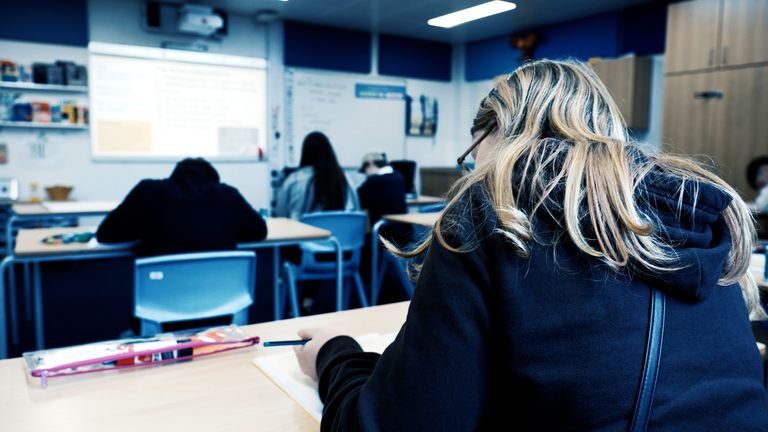
More than a decade ago, when today’s teenagers were still in primary school, platforms like Instagram, Snapchat and YouTube were barely part of most children’s lives. TikTok did not yet exist.
Now, for many families, social media dominates teenage social life. Apps such as Snapchat have become central to communication between friends, while TikTok is described by some as an endless scroll of quick dopamine hits.
It is little surprise that the idea of a government-mandated ban on social media for children is increasingly popular with parents — though far less so with young people themselves.
One 13-year-old interviewed for this report argued it would be unfair to remove platforms that her generation “was born into”, especially when adults themselves spend so much time on their phones.
A Shift in Public Opinion
Across Europe, governments are responding to mounting parental concern.
France and Spain have pledged to introduce laws that would restrict or ban child access to social media as early as this year.
Other countries — including Austria, Czech Republic, Denmark, Finland, Greece, Italy and Slovenia — are considering similar measures.
Portugal is examining whether parental consent should be required for underage access. Meanwhile, the European Union has expressed support for a bloc-wide approach.
In the UK, the Westminster government has said it will consult on social media access for under-16s.
“A Tipping Point”
Clare Melford, chief executive of the Global Disinformation Index, compares the situation to historic delays in regulating tobacco.
“We knew cigarettes were harmful and addictive and kill people for decades before we actually got legislation that made a difference,” she said, arguing that although social media companies have existed for a relatively short time, progress feels slow for families currently affected.
Pushback from Big Tech and Washington
Campaigners say resistance from powerful tech firms and political allies remains strong.
In the United States, Secretary of State Marco Rubio banned several European online safety campaigners from entering the country in December, including Clare Melford.
Imran Ahmed, head of the Centre for Countering Digital Hate (CCDH), said he was shocked after facing threats of detention over his advocacy work.
At the same time, tech leaders have publicly criticised European proposals. Elon Musk, owner of X, strongly attacked Spanish Prime Minister Pedro Sanchez after Spain announced plans for stricter controls.
Action in the US
Despite political divisions in Washington, individual US states — including Florida — have advanced legislation to limit children’s access to social media. In Congress, online child safety measures are attracting rare bipartisan support.
Legal action may also prove influential. Court cases in states such as California are examining claims that certain apps are designed in ways that encourage addictive use among young people. If successful, such cases could pressure companies to modify their platforms for children.
An Ongoing Battle
Campaigners argue that public opinion is shifting decisively toward tighter regulation. However, they acknowledge that the industry’s financial power and political influence remain formidable.
For many parents, the policy debate continues alongside everyday arguments at home — a reminder that even if governments act, changing children’s digital habits may take far longer.