UK growth slows after big fall in car production
 Raphael Afesomu
UK Economic Growth Slows to 0.1% as Car Production Hit by Cyber-Attack
The UK economy grew by just 0.1% between July and September, according to official figures, as a steep fall in car production weighed heavily on output.
The figure, published by the Office for National Statistics (ONS), came in below analysts’ expectations of 0.2%, marking a setback for Chancellor Rachel Reeves, who has repeatedly made economic growth her top priority. The data comes less than two weeks before the Budget, where Reeves is widely expected to announce tax rises.
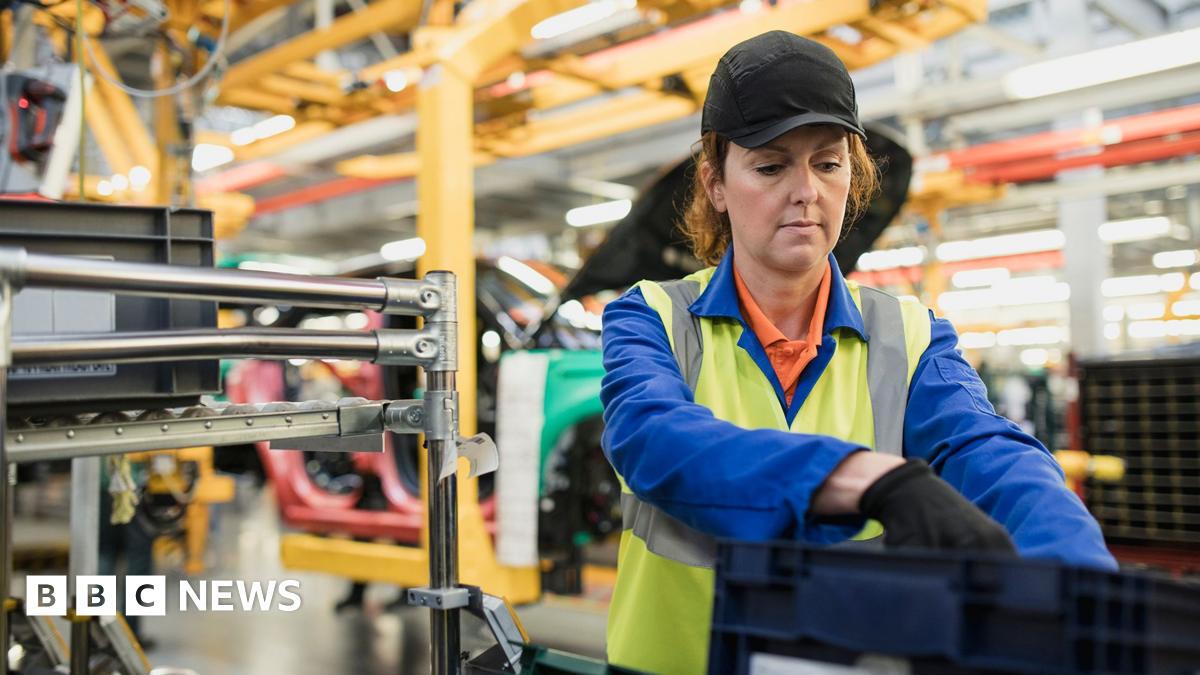
The ONS said there was a “marked” fall in car production in September following a cyber-attack on Jaguar Land Rover (JLR), which forced the carmaker to halt production for five weeks. Even excluding this disruption, overall growth across other sectors remained weak.
Sluggish Growth Across Sectors
While the services sector — which includes retail, hospitality, real estate, and entertainment — and construction both expanded, their growth was slower than in the previous quarter. Consumer spending also remained subdued, and economists warned that weak household demand could continue to drag on the economy for the rest of the year.
The slowdown follows GDP growth of 0.3% between April and June and 0.7% in the first three months of 2025. In September alone, the economy contracted by 0.1%, as car output dropped by 28.6% due to the cyber incident.
Overall, production output fell by 2% in September — the sharpest fall of the year.
Analysts Expect Rate Cut
Some economists said the disappointing figures increased the likelihood that the Bank of England could cut interest rates next month.
Rob Wood, chief UK economist at Pantheon Macroeconomics, said the weak growth figures “all but seal a December rate cut,” especially when considered alongside the soft labour market data released earlier in the week.
Businesses Feeling the Strain
Many small and medium-sized businesses said the slowdown reflected the ongoing impact of higher taxes and rising costs.
Allan Jones, managing director of TC Morris, a pie manufacturer in Dudley, West Midlands, said his company’s running costs had risen by around £200,000 this year.
“I think there’s a limit to what people will pay for a pork pie,” he said. “We’ve passed on some price increases, but we’ve had to absorb quite a bit too.”
He urged the government to use the upcoming Budget to lower taxes, reduce energy costs, and expand investment grants to help firms like his.
Political and Expert Reactions
Responding to the figures, Chancellor Rachel Reeves said that despite the slowdown, the UK had been the fastest-growing G7 economy in the first half of the year.
“There’s more to do to build an economy that works for working people,” she said. “At my Budget later this month, I will take fair decisions to build a strong economy that helps us cut waiting lists, reduce debt, and lower the cost of living.”
Shadow Chancellor Mel Stride criticised the government, saying the prime minister and chancellor were “in office but not in power,” claiming that Sir Keir Starmer had “stripped the chancellor of responsibility for the Budget.”
“Economy Struggling for Momentum”
ONS director of economic statistics Liz McKeown said: “There was a particularly marked fall in car production in September, reflecting the impact of a cyber incident, as well as a decline in the often-erratic pharmaceutical industry. Services were the main driver of growth, with business rental, live events, and retail performing well.”
Ruth Gregory, deputy chief UK economist at Capital Economics, said that even without the JLR disruption, the economy “is struggling to gain decent momentum.”
“With tax rises expected in the upcoming Budget likely to trim GDP by around 0.2% in 2026, there is little reason to think that growth will accelerate much from here,” she added.
Summary:
-
UK GDP grew 0.1% in Q3 2025 — slower than expected.
-
Car production fell 28.6% in September after the JLR cyber-attack.
-
Consumer spending and services growth remain weak.
-
Economists predict a Bank of England rate cut in December.
-
Businesses call for tax relief and investment support in the Budget.