Why is Trump threatening to sue the BBC for $1 billion?
 Raphael Afesomu
BBC Faces $1 Billion Lawsuit Threat from Trump Over Edited Documentary
London — Two hours ago
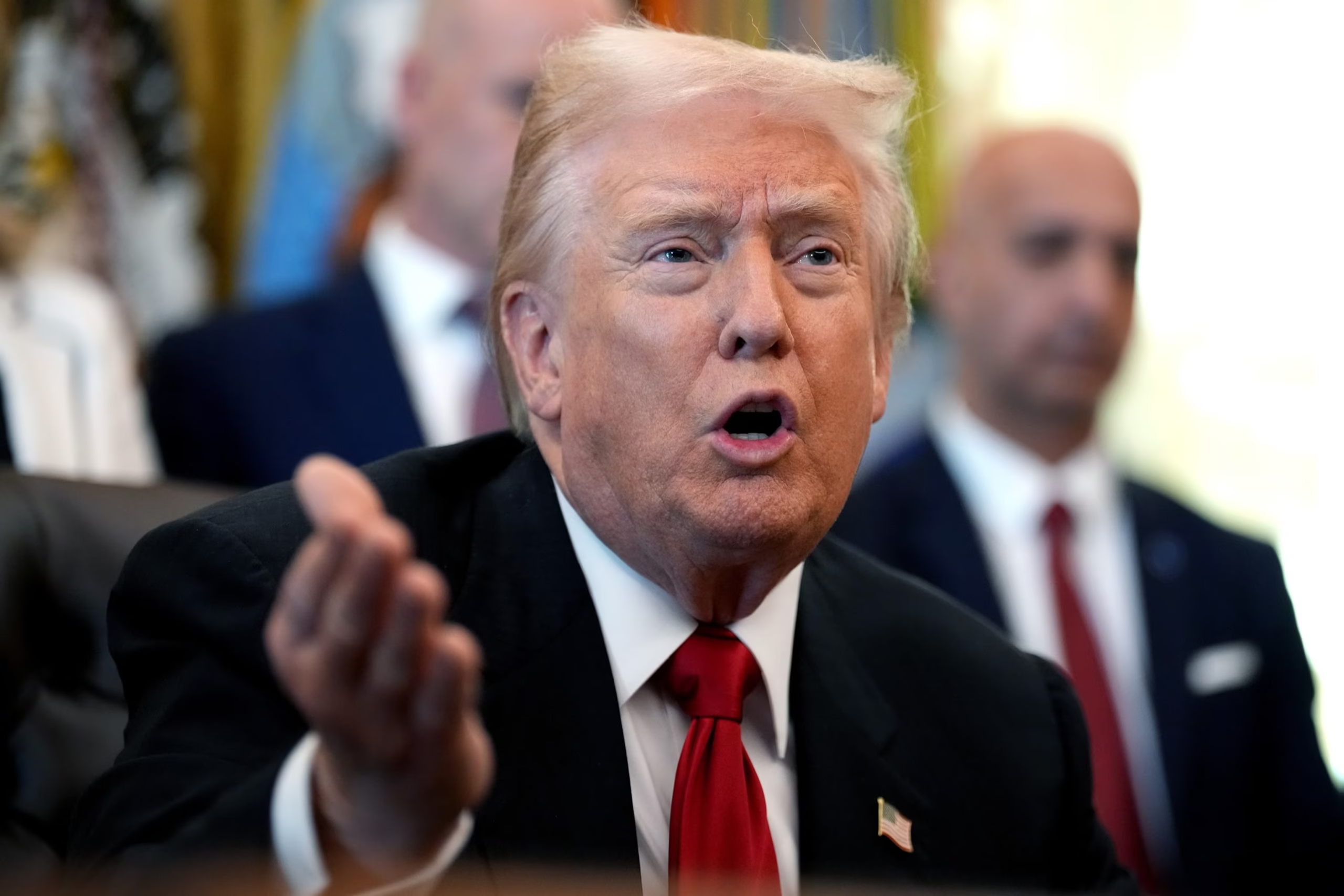
The BBC has been thrown into turmoil after U.S. President Donald Trump threatened to sue the broadcaster for $1 billion, accusing it of maliciously editing footage of one of his speeches in a 2024 documentary. BBC Chair Samir Shah has since apologized, calling the edit an “error of judgment.”
The controversy centers on the BBC documentary “Trump: A Second Chance?”, aired in October 2024 just before the U.S. presidential election. The program appeared to show Trump urging supporters to “fight like hell” moments before the January 6, 2021, Capitol riot — when in fact, the remarks were made nearly an hour apart in his original speech.
A leaked memo by Michael Prescott, a former adviser to the BBC’s editorial standards committee, revealed the discrepancy, describing the edit as “completely misleading.” The memo, published last week by The Telegraph, accused the broadcaster of multiple editorial failings, including bias and poor oversight.
In a letter to Parliament, Shah admitted the edit “gave the impression of a direct call for violent action,” and said the BBC had made “an error of judgment.” Critics, including former BBC journalists, say leadership knew about the issue for months but failed to act until The Telegraph exposed it.
The fallout has been swift. Director General Tim Davie and BBC News Chief Executive Deborah Turness resigned Sunday, both citing accountability for the scandal. While acknowledging “serious mistakes,” Turness denied claims of institutional bias, saying, “Recent allegations that BBC News is institutionally biased are wrong.”
Trump’s lawyer alleges the documentary’s “deceptive editing” was an attempt to interfere with the 2024 U.S. election and caused “overwhelming financial and reputational harm.” The legal team is demanding that the BBC retract the film, issue a public apology, and pay damages of at least $1 billion. The broadcaster has until Friday at 5 p.m. ET to respond.
If the lawsuit proceeds, it will be filed in Florida — where state law allows defamation claims up to two years after publication, compared with just one year in the U.K. Legal experts say Trump will face an uphill battle proving harm, as he must show that viewers in Florida watched the program and thought worse of him because of it.
The potential payout dwarfs the BBC’s financial reserves. The broadcaster reported £5.9 billion ($7.8 billion) in revenue last year, with £477 million ($627 million) in cash reserves — less than two-thirds of the amount Trump is demanding.
The crisis has reignited debate about the BBC’s impartiality and future funding. The broadcaster, established by royal charter and funded through a £174.50 ($299) annual license fee, has long prided itself on independence. But amid growing political polarization, it now faces pressure from critics who argue it has lost public trust.
Far-right Reform UK leader Nigel Farage, a long-time BBC critic, seized on the scandal Monday, calling for “a much-slimmed-down BBC.” He said Trump personally expressed outrage over the documentary, reportedly asking him, “Is this how you treat your best ally?”
Trump has a history of suing media outlets. Last year, ABC reportedly paid $15 million to settle a defamation suit, while Paramount — parent company of CBS News — paid $16 million in July to resolve another. However, analysts note that Trump may struggle to reach a similar settlement with the BBC, which operates independently of U.S. political influence.
With public trust shaken and leadership in flux, the BBC now faces one of the most severe crises in its century-long history — one that could determine not just its credibility, but its survival beyond 2027, when its royal charter is due for renewal.