Man donates part of liver and bowel to save son in ‘extremely rare’ transplant
-
by
Raphael Afesomu
- No Comments on Man donates part of liver and bowel to save son in ‘extremely rare’ transplant
1st September, 2026 | News
Father Donates Part of His Liver and Bowel to Save Six-Year-Old Son in Extremely Rare Transplant
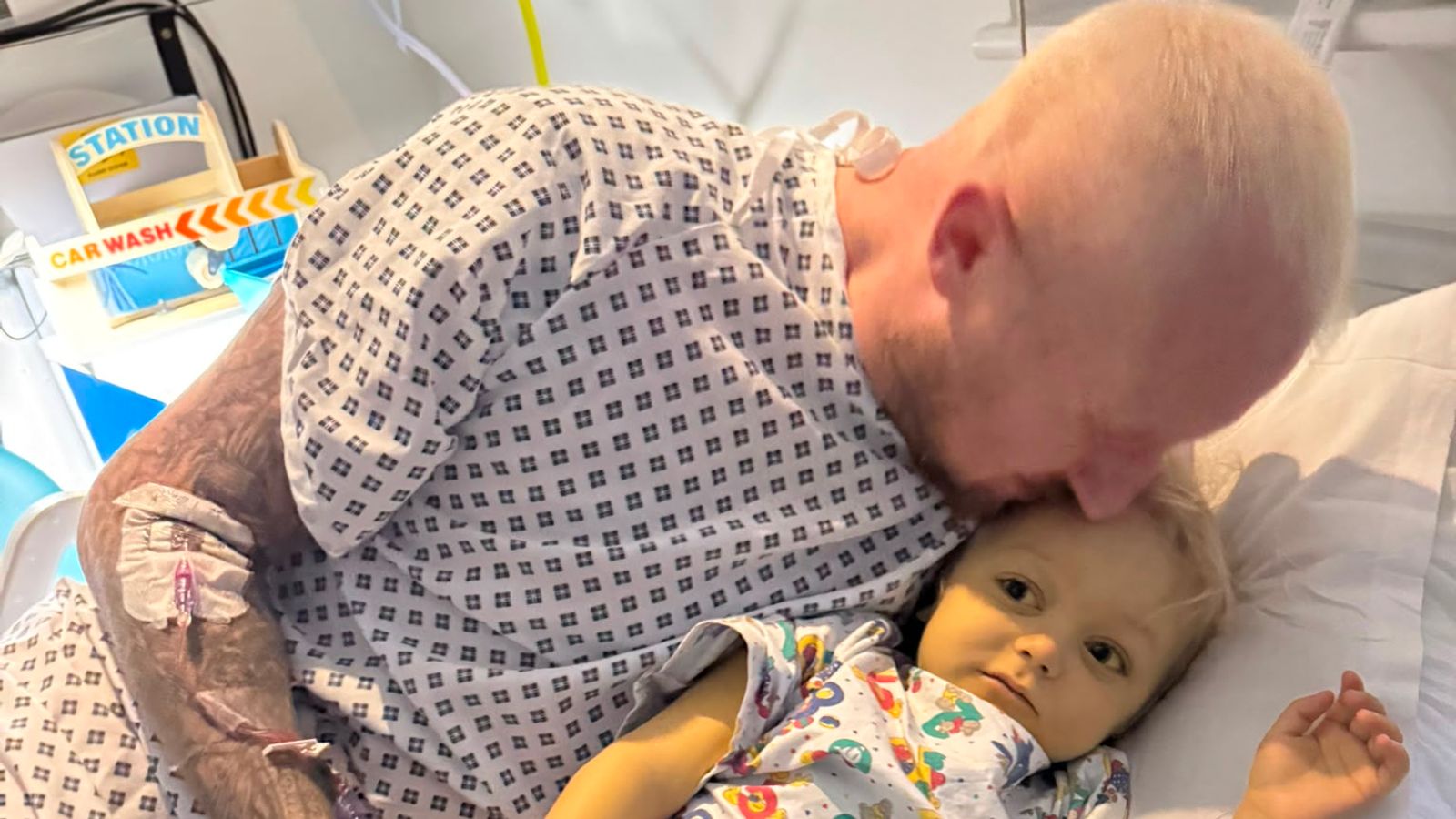
A father who donated part of his liver and small bowel to his six-year-old son in an exceptionally rare transplant has described the experience as the “greatest privilege” of his life.
Harry Jackson underwent the complex procedure at King’s College Hospital in London and is believed to be one of only about 10 children worldwide to have received this type of combined liver and bowel transplant.
Harry was born with malrotation, a condition in which the bowel develops abnormally before birth. The condition placed him at risk of volvulus, a serious complication that can occur when the bowel twists and its blood supply is affected.
Over time, Harry also developed intestinal failure-associated liver disease after years of relying on intravenous feeding to manage his condition.
His parents, Annie Cerveno and Gary Jackson, were subsequently assessed by the transplant team to determine whether either could become a suitable living donor. After weeks of medical tests, Gary was found to be a 98% human leukocyte antigen (HLA) match with his son.
In January last year, Gary underwent a 17-hour operation during which he donated approximately 20% of his liver and 1.5 metres of his small bowel to Harry.
Speaking about the decision, Gary said that as a parent, he would do anything to help his child and was grateful for the opportunity to give Harry another chance at life.
The donation process was physically and mentally demanding. Gary reportedly lost six stone and stopped drinking alcohol before the surgery, but said he would make the same decision again without hesitation.
He said watching his son recover and knowing he had played a major role in giving him a chance at a healthier life was something he could never fully put into words.
Harry’s mother, Annie, said the family had always known that her son might eventually require a bowel transplant, but they had hoped it would be many years away. His deteriorating liver condition, however, changed the situation dramatically.
She said the possibility that one of them could donate and help save their son’s life was something they had to explore immediately.
An Extremely Rare Procedure
Living-donor liver transplants remain relatively uncommon in the UK, with only a small proportion of liver transplants involving living donors, most of them involving children.
Miriam Cortes-Cerisuelo, a liver transplant consultant surgeon and clinical lead for transplant surgery at King’s College, said living donation can offer important advantages because the donated organ comes from a healthy donor and the operation can be carefully planned.
However, she described combined living-donor small-bowel and liver transplants as “extremely rare”, with only around 10 known cases worldwide, all involving children.
Harry’s successful transplant has therefore been described as a remarkable medical achievement, while his father’s donation has given the young boy a new opportunity for life.