Open Strait Of Hormuz Or Get ‘Hit Very Hard’, Trump Warns Iran
 Raphael Afesomu
05th August, 2026 | News
Trump Says Deal to Reopen Strait of Hormuz Could Be Reached Soon, Warns Iran of Consequences
U.S. President Donald Trump has expressed optimism that an agreement to reopen the Strait of Hormuz could be reached within days, while warning Iran of severe consequences if negotiations fail.
The Strait of Hormuz, a vital global shipping route for oil and gas exports, has remained at the centre of ongoing diplomatic efforts following renewed tensions after the April ceasefire. Iran has tightened control over the strategic waterway and is seeking authority to regulate passage and impose transit fees—powers it had not exercised before the conflict began on February 28.
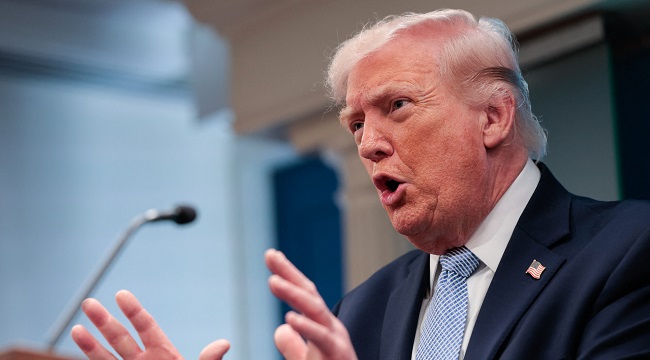
Speaking to reporters in California on Tuesday, Trump said negotiations had made significant progress and suggested that an agreement could be finalised as early as Wednesday or Thursday.
“We had a very good day,” Trump said, adding that the strait could reopen “tomorrow or the next day.”
Earlier in the day, however, the U.S. president adopted a firmer stance during an interview with Fox News, warning that if diplomatic efforts failed, Iran would face a strong military response.
“The strait is going to be open very soon, or they’re going to get hit very hard,” Trump said, insisting that freedom of navigation must be restored.
U.S. Treasury Secretary Scott Bessent also expressed optimism, saying there was a realistic possibility of reaching an agreement within days.
Despite the positive signals from Washington, Iran’s Foreign Ministry has publicly denied holding direct negotiations with the United States. However, U.S. Secretary of State Marco Rubio confirmed that Washington was involved in mediation efforts alongside Oman aimed at increasing maritime traffic through the Strait of Hormuz.
According to reports by Axios, the United States, Iran and Oman are close to reaching a temporary 60-day agreement that would allow the safe passage of commercial vessels through the strategic waterway.
Qatar, another key regional mediator, confirmed that diplomatic efforts remain active, although it stated that no direct U.S.-Iran talks were currently scheduled. Qatari Emir Sheikh Tamim bin Hamad Al Thani also discussed ongoing de-escalation efforts during a phone conversation with President Trump.
The situation in the region remains volatile. Britain’s maritime security agency (UKMTO) reported that a merchant vessel was struck by an unidentified projectile in the Strait of Hormuz, leaving one crew member missing. In a separate incident, an Indian cargo ship sank in the Red Sea after an unattributed attack, though all crew members were rescued.
The disruptions in the Strait of Hormuz have increased the strategic importance of alternative shipping routes through the Red Sea. However, maritime traffic there also faces threats from Iran-backed Houthi rebels in Yemen, who have declared a blockade targeting Saudi Arabia and have claimed responsibility for several attacks on commercial vessels.
While the United States continues to push for the reopening of the Strait of Hormuz and broader discussions over Iran’s nuclear programme, uncertainty remains over whether diplomacy or further confrontation will determine the next phase of the crisis.