Trump-Xi Summit Delivers Few Breakthroughs As Analysts See Diplomatic Gains For China
-
by
Raphael Afesomu
- No Comments on Trump-Xi Summit Delivers Few Breakthroughs As Analysts See Diplomatic Gains For China
28th September, 2026 | News
Trump-Xi Summit Delivers Limited Breakthroughs as Major US-China Disputes Remain
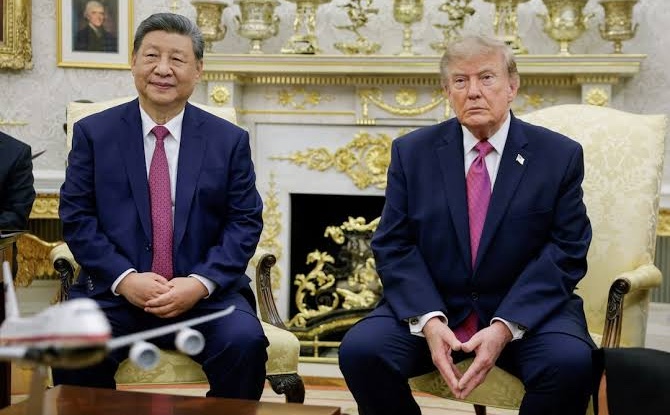
The high-profile summit between US President Donald Trump and Chinese President Xi Jinping has produced limited agreements on trade and artificial intelligence while leaving several major disputes between Washington and Beijing unresolved.
The meeting, which Trump had hoped would demonstrate the strength of his relationship with Xi, resulted in recommendations for more favourable tariff treatment covering about $30 billion in non-sensitive goods in each direction.
The two countries also agreed to extend an existing trade truce for another two months, creating additional time for broader economic negotiations.
However, analysts offered mixed assessments of the outcome, with some arguing that the meeting created a positive diplomatic atmosphere without resolving the fundamental disagreements between the two countries.
Analysts Describe US-China Relations as a Managed Stalemate
Craig Singleton, senior director for China at the Foundation for Defense of Democracies, described the relationship between Washington and Beijing as a “managed stalemate.”
He argued that the elaborate ceremony surrounding the summit contrasted with the relatively limited number of substantive agreements announced by the two leaders.
Drew Thompson, a senior fellow at the S. Rajaratnam School of International Studies in Singapore, similarly said the summit created a positive political atmosphere but did not significantly narrow differences or mutual suspicions between the two countries.
China Secures Trade and Diplomatic Space
Joe Mazur, a geopolitics analyst at Beijing-based consultancy Trivium, characterised the meeting as a “PR win” for China, arguing that Trump’s diplomatic engagements during the week demonstrated limits to US influence.
China’s former foreign ministry official and Global Governance Institution vice president Shen Weizhong offered a different perspective, saying Beijing did not necessarily expect every presidential meeting to produce major agreements.
According to Shen, the leaders’ meeting and their public display of cordial relations could itself have diplomatic significance.
Trump made a notable effort to welcome Xi, including greeting the Chinese leader at the airport. At a state banquet attended by senior officials and technology executives, Trump said the two leaders had “never gotten along better.”
China Makes Some Agricultural Concessions
Despite the limited scope of the agreements, Trump secured some concessions from Beijing.
China agreed to reduce tariffs on several US agricultural products, including corn, wheat, meat and dairy products.
However, soybeans were excluded from the latest tariff-reduction list, leaving one of the United States’ major agricultural exports outside the agreement.
The agricultural measures could provide benefits for American farmers, who are an important constituency for the Trump administration ahead of the US midterm elections.
Rare Earths Give Beijing Economic Leverage
Analysts said China’s dominance in global rare-earth production remains an important source of leverage in its economic relationship with the United States.
Rare-earth materials are important to industries including technology, automobiles and defence, making access to the resources a major issue in US-China trade negotiations.
China’s broader trade activity has also continued despite US tariff pressure, according to the analysis surrounding the summit.
The absence of a large delegation of Chinese corporate executives accompanying Xi also highlighted unresolved questions surrounding Chinese investment in the United States and the possibility of a broader two-way investment agreement.
Taiwan Remains a Major Point of Disagreement
The summit also left the sensitive issue of Taiwan unresolved.
China claims Taiwan as part of its territory, while the island operates under its own government. US support for Taiwan remains a longstanding point of tension between Washington and Beijing.
Xi raised the issue during his discussions with Trump, but Trump did not address Taiwan in his public remarks during the summit.
That contrasted with Trump’s comments at their May meeting, when he described a proposed $14 billion US arms package for Taiwan as a negotiating tool.
Jeremy Chan, a senior analyst at Eurasia Group and former US diplomat in China, argued that repeated high-level meetings could provide Beijing with additional time to delay US measures it opposes, including arms sales to Taiwan.
His assessment was presented as a strategic interpretation rather than a stated outcome of the summit.
Iran War Also Remains Unresolved
The meeting provided limited evidence of a breakthrough on the conflict involving Iran.
Xi has urged the United States and Iran to return to negotiations, while Beijing has continued to oppose some US positions regarding the conflict.
China did not indicate that it would take a major role in helping Trump achieve an end to the war.
Trade and AI Dialogue Continue
The summit ultimately produced agreements covering aspects of trade and artificial intelligence dialogue, while broader disagreements remained over technology, rare earths, Taiwan and other strategic issues.
Washington has portrayed regular meetings between Trump and Xi as important for maintaining stability between the world’s two largest economies.
For now, the latest summit has provided both sides with additional room for negotiations while leaving many of the underlying US-China disputes unresolved.