
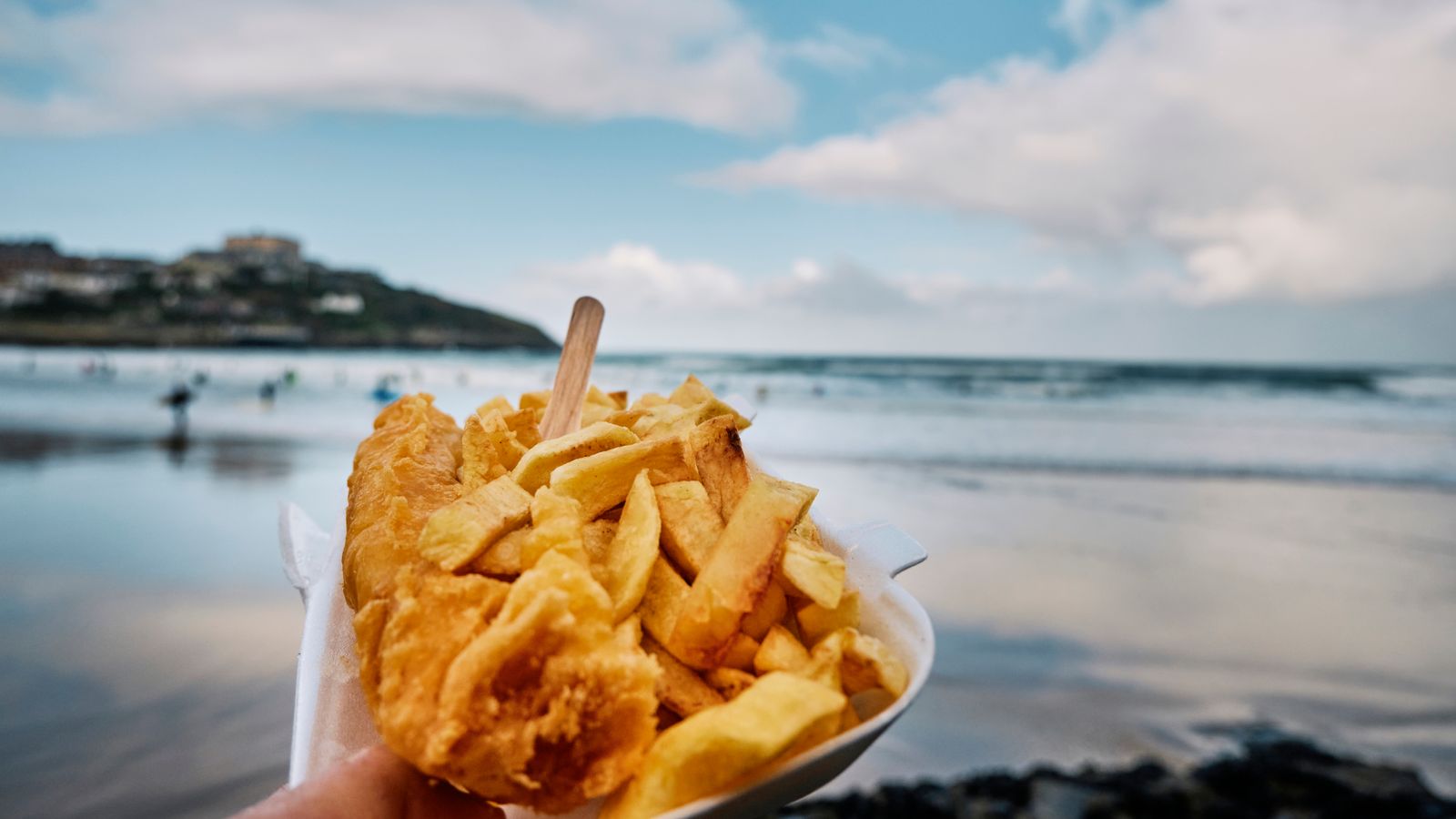
The war in Iran is coming for Britain’s favourite food
 Raphael Afesomu
30th April, 2026 | News
Britain’s Chippies in Crisis: Why the “Spud Surge” is Delayed but Inevitable
LONDON — The British staple of fish and chips is facing an existential threat as the indirect inflationary effects of the Iran war begin to permeate the food supply chain. While raw potato prices are currently stable due to a European supply glut, industry experts warn that a “massive” price hike is locked in for 2027.
Speaking to Sky News, Scott Walker, CEO of GB Potatoes, explained that the unique structure of the UK potato industry is currently acting as a temporary shield for consumers—but that protection has an expiration date.
The “Contract Shield” is Weakening
Most UK potatoes are grown under annual contracts signed well in advance. This means that for the 2026 season:
- Fixed Prices: Wholesalers and supermarkets are still paying rates agreed upon before the recent spike in war-linked costs.
- Pre-bought Supplies: Fertiliser and fuel for the current crop were largely purchased before the outbreak of the conflict.
- The 2027 Cliff: Walker warns that next year’s contracts will have to account for a doubling of red diesel prices (rising from 65p to as high as 140p per litre) and surging fertiliser costs.
Fish and Chip Shops on the Frontline
While the “raw spud” remains affordable for now, the shops that fry them are already underwater. The National Federation of Fish Fryers reports that several factors are driving immediate price hikes and portion size reductions:
- Energy and Oil: Sky-high electricity bills and the doubling of sunflower oil prices are crushing margins.
- Fish Costs: International shipping and supply disruptions have made the “fish” half of the dish increasingly expensive.
- Regulatory Burden: Rising minimum wage requirements and new government plastic packaging taxes are adding to the overhead.
“There comes a point where the costs just aren’t swallowable anymore,” said Mike Russell Smith, co-founder of Savoursmiths. He noted that even with an oversupply of potatoes, the cost of labour, cold storage, and frying oil is simply too high to ignore.
The Irrigation Risk
The outlook for late 2026 and 2027 also hinges on the British weather. A dry summer would force farmers to use diesel-powered generators for irrigation. With red diesel prices “flashing red,” a drought could trigger “exceptional cost” claims from farmers, potentially breaking current contracts and forcing prices up sooner than expected.
A Plea for Deregulation
Industry leaders are calling on the government to provide more than just “monitoring.” Their demands include:
- Energy Support: Direct help with electricity costs for wholesalers and fryers.
- Water Access: Relaxing regulations to allow farmers to store more water to ensure food security during dry spells.
- Regulatory Relief: A pause on new rules and taxes that add to the administrative burden of farming.
A government spokesperson insisted that the UK has a “resilient food system” and does not expect availability issues, but for the local chippy, the concern isn’t whether the potatoes exist—it’s whether customers can afford them when they are fried.