
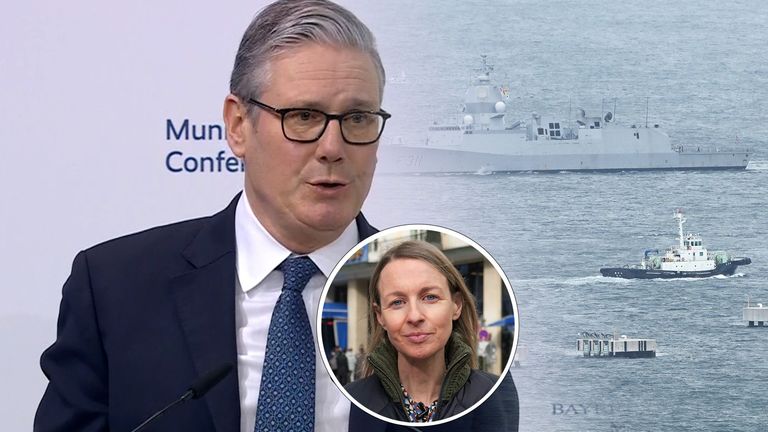
Growing unease over UK’s stuttering efforts to rearm
 Raphael Afesomu
10th June, 2026 | News
UK Defence Investment Plan Faces Further Delay Amid Funding Dispute
The UK government could announce all or part of its long-awaited defence investment plan by Friday, but disagreements over funding remain unresolved, raising concerns about Britain’s efforts to strengthen its armed forces.
The defence investment plan, originally expected more than six months ago, has yet to be finalised. The delay has prompted questions within defence circles about whether last year’s Strategic Defence Review may already need updating due to changing security challenges and the lack of progress in implementing its recommendations.
Prime Minister Sir Keir Starmer has repeatedly stressed the importance of strengthening Britain’s military capabilities, particularly as security threats increase across Europe. Speaking at a security conference in Munich earlier this year, he argued that military strength has become essential in today’s geopolitical environment.
However, uncertainty surrounding defence funding has left much of the UK’s defence industry waiting for clarity on future projects and investments.
Government and industry officials had reportedly expected the investment plan to be published this week, but negotiations between the Ministry of Defence (MoD) and the Treasury have delayed its release. The Treasury’s latest funding offer is understood to be significantly below what defence officials believe is necessary.
Funding Targets Under Debate
The defence sector is pushing for a clear commitment to increase defence spending from approximately 2.3% of GDP to 3% within a defined timeframe. Such a commitment would unlock tens of billions of pounds in additional funding and provide greater certainty for long-term planning.
The government has already pledged to raise core defence spending to 3.5% of GDP by 2035, in line with NATO goals. However, critics note that this is the latest deadline permitted by the alliance, while several NATO members are moving much faster to strengthen their militaries.
Although discussions continue, reports suggest the Treasury’s proposed increase ranges between £12 billion and £18 billion over four years. Defence officials are believed to favour funding at the higher end of that range, while the Treasury has reportedly offered an amount closer to the lower figure.
Possible Outcomes
One option under consideration is for the prime minister to announce headline details of the investment plan on Friday, including commitments to major programmes such as the joint UK-Japan-Italy project to develop next-generation fighter jets. A full version of the document could then be published later.
Alternatively, the entire plan could face another delay, although the government has promised it will be released before the NATO summit scheduled for 7–8 July.
Why the Plan Matters
The Strategic Defence Review published last year highlighted years of underinvestment across the British Army, Royal Navy and Royal Air Force. It outlined a roadmap for modernisation, rearmament and military transformation but depended heavily on additional financial support from the government.
The defence investment plan was intended to explain how those ambitions would be funded. Instead, prolonged negotiations between the MoD, the Treasury and Downing Street have created uncertainty across the defence sector.
The central challenge for the government remains whether to significantly increase defence spending—potentially at the expense of other public services—or adopt a more cautious approach due to concerns about the military’s record in managing large budgets.
Until a final decision is reached, defence companies and military planners remain without the clarity they say is needed to prepare for future security threats.
A Ministry of Defence spokesperson said the government is working to finalise the plan and remains committed to delivering modern equipment and capabilities for the armed forces as soon as possible.